CC licensed
An idea for a post-apocalyptic fantasy setting:
The god of the harvest has set himself against the folk of the land. Did they anger him? Was he driven mad by injury, or corrupted by the people’s misuse and abuse of the food system? Either way, the harvest is cursed – not with famine, but with hostile abundance. Let me explain:
The cursed harvest
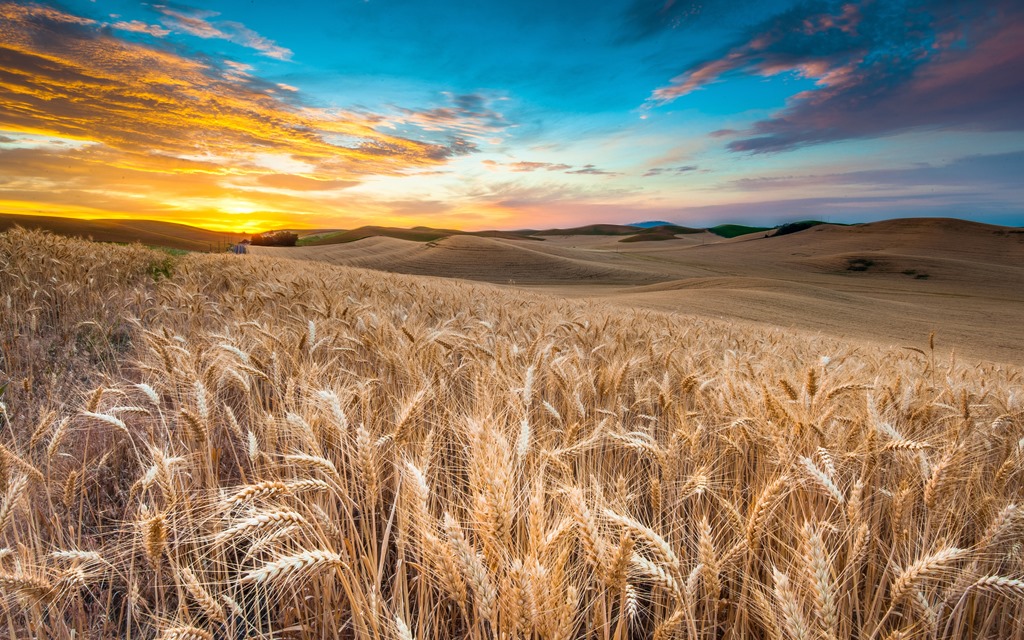
In the summer, everywhere people once farmed, there are towering fields of ripe wheat. To go in too deep is to fall prey to the creatures that live within – the polevik, dressed in black and with a mop of grass atop his head leads you deep into the direction-less heart of the wheat. Or the feldgeister, the spirit of the whirlwind who snatches you up and leaves your body to be found later – missing your ribs.
At the edges hungry humans gnaw at the crop – but to set a sickle to the harvest is to invite an “accidental” wound that festers and kills. For some – just enough that people keep trying – eating bread made from the flour is harmless. For others it kills instantly. For many more it slowly corrupts – mind, body or both. Cruel kingdoms of not-quite humans grow strong in the shadow of the wheat.
The truest spirit of the harvest is wheat. But other crops are also cursed. Orchards are haunted galleries where – sometimes – the trees reach down and strangle those who stray in. Rice paddies hold spirits that drown those who enter them, or hungry fish with infectious bites. Cotton fields sway silently, tiny wisps of blinding fibre drifting into the eyes of animals and people who venture in.
Surviving the harvest
Harvest season is when these fields are most deadly. The spirits are most active then, bringing in the harvest. (Some report seeing them pouring grain down belching sinkholes – but no one knows what they are feeding). In winter the fields lie dormant and it is less risky to cross them. At other times, stick to the old roads and the wild margins.
The smaller the field, the less homogeneous, and the less like wheat, the less the curse strikes. So people have higgledy-piggledy vegetable gardens with little patches of potato mixed in with nettles and brambles.
The remaining pastureland for livestock is gradually being consumed by the cereal crops. More and more the people are hunter-gatherers, few in number, eating and traveling through the wild land on the edges of the fallen civilization.
Challenges await
The god of the hunt has given her blessing to help the ailing folk. But her gifts are always ones that require valour to realise. She has resurrected the ancient race of aurochs, massive horned cattle, and they graze on the wheat fields, strong enough to survive the demons in the long grass – usually. They are in turn preyed upon by mighty predators – huge bears, packs of wargs, rocs.
Cities and large castles can no longer be supported by the broken food system. They lie in ruin, often overgrown with malignant crops. They are full – perhaps – with the treasures of the fallen, decadent age, awaiting those brave enough to plunder them.
Commentary
If you want to dig into the themes more you can lean into dealing with the real and contemporary trauma of a world ravaged by profit-focused, environment-destroying agribusiness. Perhaps make this a “true” post-apocalyptic setting with rusting combine harvesters and abandoned warehouses and lorries.
To discuss on Mastodon, see this thread.